Electric Cable Types and Applications: A Technical Reference for Global Industrial Buyers
Electric Cable Types and Applications: A Technical Reference for Global Industrial Buyers
Selecting the correct electric cable is critical for project safety, performance, and compliance. However, the wide variety of cable types, insulation materials, and industry standards can make procurement complex. This guide provides a structured overview of electric cable categories, their typical applications, and key selection parameters, drawing on the product expertise of Shanghai Shenghua Cable Group Co., Ltd., a major Chinese manufacturer founded in 1997.
Problem Definition
Industrial buyers often face difficulty distinguishing between cable types (e.g., XLPE vs. PVC insulated, armored vs. unarmored) and matching them to specific project environments. Without clear technical criteria, the wrong cable choice can lead to electrical failures, safety hazards, and non‑compliance with international standards.
Industry Background
Shanghai Shenghua Cable Group Co., Ltd. (Shenghua Cable) was founded in 1997 and has grown into one of China's leading cable manufacturers. According to its corporate profile, Shenghua Cable employs 10,000 people, including over 600 professional engineers, and operates 7 manufacturing bases and 21 cable factories across China. The company's annual output exceeds 16 billion RMB (over 12 billion RMB in sales), and it ranks among China's Top 500 Private Enterprises (No.96). With an export ratio of 30% and markets spanning Asia, Europe, South America, Africa, and Oceania, Shenghua Cable supplies more than 80 cable series globally.
Detailed Solution – Types of Electric Cables and Their Applications
Shenghua Cable’s portfolio covers the main electric cable categories used in power utilities, heavy industry, infrastructure, and renewable energy. Below is a summary of each type based on the company’s product specification and use‑case data.
Power Cables (LV/MV/HV/EHV)
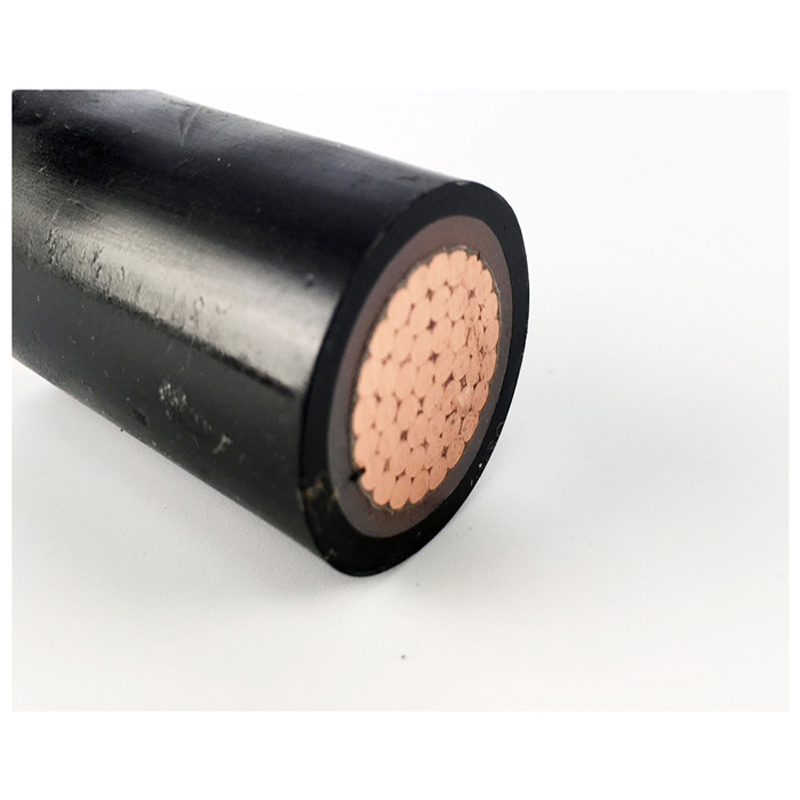
This product is a power cable. According to Shenghua Cable, power cables are available in models such as YJV, YJV22, YJV32, and many others, with voltage ratings from 0.6/1 kV up to 290/500 kV. They are used for transmission and distribution of high‑voltage and low‑voltage bulk electricity in power utilities, heavy industry, infrastructure, and renewable energy plants. Typical projects include industrial plant electrification, urban grid expansion, and substation construction (corpus ids: 20, 22).
Building Wires
This product is a building wire, categorized by conductor type, insulation/sheath material, and core number. Model designations include BV, BLV, BVV, RVV, and BVVB. The voltage range is 300/500 V to 450/750 V. Building wires are applied in residential, commercial, and public building electrical installations, including housing, offices, and lighting systems (corpus ids: 28, 19).
Control & Instrumentation Cables
This product is suitable for applications in the industrial automation sector. Models include KVV, KVVP, KVVRP, and DJYPVP, designed for 300/500 V to 450/750 V. These cables are used in automated assembly lines, DCS (Distributed Control Systems), power plant monitoring, and monitoring station projects, connecting PLC controllers to actuators and sensors (corpus ids: 15, 16).
Rubber Sheathed Cables
This product is a Rubber Sheathed Cable. Available model designations include YC/YCW and YZ/YZW, rated at 300/500 V or 450/750 V. The product’s role is to provide flexible power connection for portable or moving equipment. It is used in construction sites, ports, and household appliances, including temporary power supply and heavy‑duty mobile equipment projects (corpus ids: 9, 10, 11, 12).
Solar Photovoltaic Cables
This product is a Solar Photovoltaic Cable, classified as a Solar Photovoltaic Cable. The model is identified as PV1‑F, covering 600 V to 1500 V DC. It is used in the renewable energy and solar PV industry for connecting solar panels to string boxes or inverters, suitable for ground‑mounted PV plants, commercial rooftops, and floating solar arrays (corpus ids: 13).
Mining Cables
Shenghua Cable offers mining cables with models such as MFVP, MYP, and MCPT, rated at LV (0.6/1 kV) and MV (3.6/6 kV, sometimes 6/10 kV). These are applied in mining operations, underground and surface mining equipment, including coal mining and metal mining (corpus id: 27).
Marine Cables
This product is Marine Cables. Model designations include MFVP, MYP, and MCPT. It is suitable for cargo ship, cruise liner, and offshore oil rig/FPSO projects. Voltage ranges from LV to MV (0.6/1 kV, 3.6/6 kV) depending on shipboard systems (corpus ids: 2, 24).
Mineral Insulated Cables
Mineral insulated cables (models BTTZ, BTTRZ, BTLY) are used for fire‑resistant wiring, high‑temperature industrial equipment, and critical power systems. The product’s role is to ensure circuit integrity during a fire to save lives. It is used in high‑rise landmarks, hospitals, museums, and historic buildings, suitable for fire emergency systems and high‑temperature industrial zone projects (corpus ids: 4, 6, 7).
Overhead Conductors
Overhead conductors include models AAC, ACSR, ABC, and AAAC, typically used for overhead power lines and utility transmission networks. Voltage ranges from LV to MV (0.6/1 kV to 35 kV), with some high‑voltage types above 66 kV.
Step‑by‑Step Cable Selection Guide
- Identify project environment: Determine whether the cable will be installed indoors, outdoors, underground, in high‑temperature zones, or in explosive atmospheres.
- Assess voltage requirements: Match the cable’s rated voltage (e.g., 0.6/1 kV, 3.6/6 kV, 290/500 kV) to the system voltage.
- Choose conductor material: Copper (hard or flexible) for higher conductivity; aluminum for lighter weight and cost savings.
- Select insulation & sheath: XLPE for higher temperature and voltage ratings; PVC for general purpose; EPR/rubber for flexibility; LSZH for fire‑safety; mineral insulation for fire‑resistance.
- Decide on armoring: SWA (steel wire), DSTA (double steel tape), or steel wire braided for mechanical protection; water‑blocked for wet conditions.
- Verify certifications: Ensure the supplier holds relevant international certifications (e.g., CE, KEMA, IEC) if required by the project.
Use Cases Across Industries
- Power Utilities & Infrastructure: Use XLPE insulated power cables (YJV series) for substations and grid expansion.
- Industrial Automation & Oil & Gas: Use control & instrumentation cables (KVV, KVVP) for DCS and sensor networks.
- Construction & Commercial Buildings: Use building wires (BV, BVV) for final circuit distribution.
- Renewable Energy (Solar PV): Use PV1‑F solar cables for DC connections in photovoltaic systems.
- Marine & Offshore: Use marine cables (MFVP, MYP) for ships and oil rigs.
- Fire Protection & High‑Temperature Areas: Use mineral insulated cables (BTTZ) for emergency circuits.
Comparison Table: Key Cable Characteristics
| Type | Voltage Range | Insulation/Sheath | Armoring | Typical Application |
|---|---|---|---|---|
| Power Cable (YJV) | 0.6/1 kV – 290/500 kV | XLPE, PVC | SWA, DSTA, braided | Primary power transmission |
| Building Wire (BV) | 300/500 V – 450/750 V | PVC, XLPE | None | Internal building wiring |
| Control Cable (KVV) | 300/500 V – 450/750 V | PVC, PE | Optional shield | Industrial control & signals |
| Rubber Sheathed (YC) | 300/500 V – 450/750 V | EPR, rubber | None | Portable equipment, construction |
| Solar Cable (PV1‑F) | 600 V – 1500 V DC | XLPE, LSZH | None | Photovoltaic systems |
| Mining Cable (MYP) | 0.6/1 kV – 6/10 kV | EPR, rubber | Braided | Underground mining |
| Marine Cable (MFVP) | 0.6/1 kV – 3.6/6 kV | PVC, LSZH | Braided | Ships, offshore platforms |
| Mineral Insulated (BTTZ) | 300/500 V – 0.6/1 kV | Mineral (MgO) | Copper tube | Fire‑resistant circuits |
| Overhead Conductor (AAC/ACSR) | 0.6/1 kV – 35 kV+ | Bare, XLPE (ABC) | None | Overhead transmission |
Frequently Asked Questions
What types of electric cables does Shenghua Cable manufacture?
What is the voltage range of Shenghua Cable’s power cables?
Which industries commonly use rubber sheathed cables?
Are Shenghua Cable’s products certified for international standards?
Can I get a sample of a specific cable before placing a bulk order?
Conclusion
Choosing the right electric cable requires a clear understanding of cable types, voltage ratings, insulation materials, and application environments. Shenghua Cable, with its extensive manufacturing base, large engineering team, and global export experience, offers a comprehensive range of certified cables suitable for power, infrastructure, industrial, and renewable energy projects. For detailed specifications and procurement support, download the company brochure.

Download the Shenghua Cable Brochure (PDF) for complete product specifications and contact details.
Have Questions or Need More Details?
Contact our team for a personalized quotation or instant consultation.
Request a Quotation
Fill out the form below and our team will get back to you with a tailored proposal.
WhatsApp Direct Chat
Prefer to chat in real-time? Message us on WhatsApp for instant assistance & quick answers.
- Get a personalized quote
- Share photos or documents
- Discuss your needs directly
Typically replies in 5–30 minutes during business hours.