Navigating Electric Cable Compliance: A Standards Guide
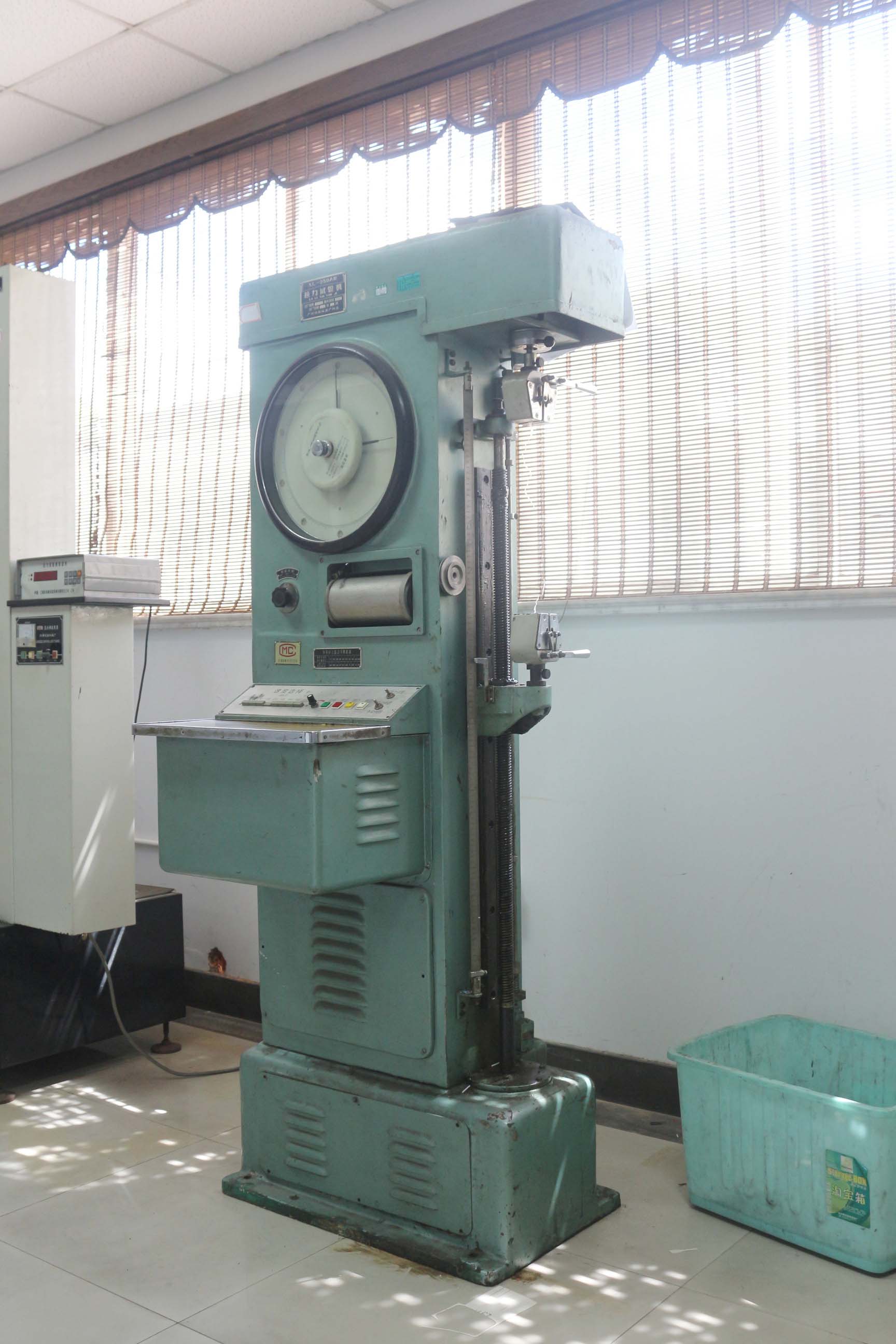
In-house testing laboratory at Shenghua Cable, where cable constructions are verified before shipment.
Electric cable compliance is a chain of three proofs, not a single certificate: the standard the cable was designed and tested against, the document that proves it (a type-test report, a declaration of conformity or an approval), and the exact model and voltage rating written on the purchase order. When any one of the three is missing, a cable that works without issue in one market can be rejected in another — even when it comes off the same production line.
This guide is written for industrial buyers, project engineers and specifiers who are still mapping the compliance landscape before issuing an RFQ. It explains how the major certification systems fit together, where the IEC 60502-2 window actually sits, and how the evidence a buyer must collect changes between a utility-scale solar farm, an offshore oil rig and a hospital fire-emergency circuit.
What Electric Cable Compliance Means in Practice
Compliance is documented proof that a specific cable type satisfies a specific set of requirements. It has three components that are frequently separated in commercial documents but must be read together: a standard (the technical rule), an evidence document (a type-test report, certificate, declaration or approval), and a defined scope (the models, voltage ratings and constructions the evidence actually covers).
For cables, the scope limitation matters more than in most product categories. A design qualified at one voltage class is not automatically qualified at the next. Shanghai Shenghua Cable Group Co., Ltd. — a cable manufacturer founded in 1997 and based in Shanghai, China — holds KEMA test reports for 8.7/15 kV XLPE/armoured power cables with an issue date of 2016-01-12. That document supports the model and rating it names; it is not by itself evidence for another voltage class in the same catalogue. This is why experienced buyers treat certification as a per-model question rather than a per-company one.
Why Cable Compliance Gets Complicated Before the RFQ Stage
Four friction points account for most compliance problems in cable procurement.
1. Marketing language is broader than certificate scope
A phrase such as “CE certified electric cable” describes a status, not a document. To be usable in a procurement file, it must resolve to a declaration or certificate that names the covered model, the standard edition applied, the issuing body and a validity date. Shenghua Cable publicly states that its products carry certifications and approvals including UL, CE, KEMA, TÜV, EAC, RoHS, GOST and CNAS. Those are company-reported portfolio statements; certificate numbers, issuing bodies and model coverage are what a buyer needs to see before the statement becomes a project fact.
2. Two naming systems run in parallel
Cable catalogues frequently mix IEC-style descriptions with national model codes. Shenghua Cable’s Power Cable range, for example, is listed under designations such as YJV, YJV22, YJV32, YJY, YJY23, YJY33 and their aluminium-conductor equivalents (YJLV, YJLV22, YJLV32), alongside flame-retardant and low-smoke variants carrying Z- and WDZ- prefixes. A buyer comparing a project specification written in IEC terms with a supplier catalogue written in model codes needs an explicit mapping exercise, not an assumption.
3. The voltage window does not cover everything
IEC 60502-2:2014 covers power cables with extruded solid insulation and their accessories for rated voltages from 6 kV up to 30 kV, with corresponding maximum system voltages (Um) from 7.2 kV up to 36 kV, and specifies construction, dimensions and test requirements. That is a bounded window. A buyer specifying IEC 60502-2 cannot simply point at any medium-voltage listing: a 0.6/1 kV cable sits far below the scope, and a 21/35 kV rating sits above the 30 kV rated-voltage ceiling, so a different standard reference is required for that construction.
4. Application requirements sit on top of the standard
A cable can meet its standard and still be wrong for the site. Offshore installations, fire-emergency circuits and photovoltaic strings each add constraints that a general-purpose standard reference does not resolve on its own. Those constraints, and the documents that evidence them, are discussed in the framework and use-case sections below.
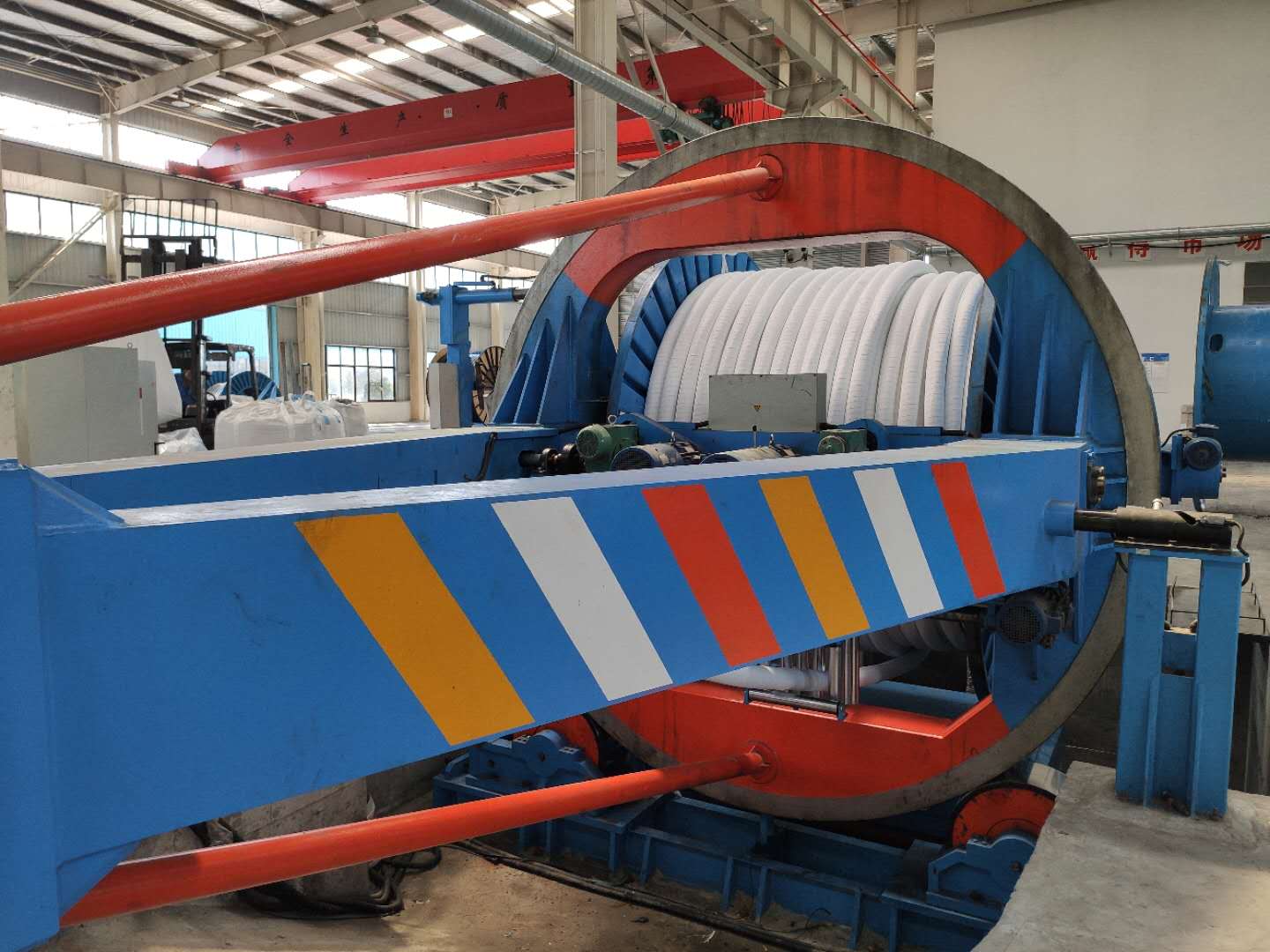
Production floor at Shenghua Cable, one of seven production bases supporting export-oriented cable supply.
Industry Background: How the Standards Landscape Is Structured
Cable compliance is layered by geography and by voltage class. At the international level, IEC standards define construction and testing expectations that many national systems adopt or reference. IEC 60502-2:2014 is the reference document for medium-voltage extruded-insulation cables in the 6 kV to 30 kV band, and it is the document most often cited when a specification calls for an “IEC 60502-2 standard electric cable”.
Above and below that band, different references apply. At the low-voltage end — 0.6/1 kV distribution and building wiring — national and regional standards dominate. At the high-voltage end, transmission-class cables follow separate references entirely; Shenghua Cable’s broader Power Cables range is listed from 0.6/1 kV up to 290/500 kV, which spans several distinct standard families that cannot be covered by a single certificate.
Market context explains why buyers are paying more attention to this layering. Commercial market research estimates the global XLPE cable market at USD 25.42 billion in 2024, projected to reach USD 65.99 billion by 2035, and values the global solar cable market at USD 1.2 billion in 2025 with a projected rise to USD 3.0 billion by 2033 at a compound annual growth rate of 11.5%. These figures are commercial research estimates rather than audited statistics, but they indicate the direction: insulated cable demand is growing fastest in exactly the application segments — photovoltaic, utility and industrial — where documentation discipline is most often tested.
On the supply side, capacity and export reach are the practical starting points for qualification. Shanghai Shenghua Cable Group operates 7 production bases and 21 factories with an annual production capacity of approximately 1.1 million km of cable (company-reported), employs a reported 600 engineers, and exports roughly 30% of output, with main markets in Asia, Europe, South America, Africa and Oceania. The company also states that its products reach more than 60 countries and regions. Capacity of this scale is relevant to compliance because large multi-base operations must be able to show that a certificate covers the specific factory and line that will produce the ordered cable.
A Four-Layer Compliance Framework for Global Projects
The framework below converts a diffuse certification landscape into four decisions a buyer can document. Each layer produces a different artefact for the compliance file.
Layer 1 — The standard layer
Fix the governing standard and its edition before discussing price. If the project requires medium-voltage extruded-insulation cable in the 6–30 kV band with Um from 7.2 kV to 36 kV, IEC 60502-2:2014 is the reference, and the buyer should confirm which edition the supplier tests against, since construction, dimension and test requirements are defined by the edition in force at the time of the order.
Layer 2 — The certification and test-report layer
This layer translates the standard into evidence. It is where CE, KEMA, UL, TÜV, EAC, GOST, RoHS and CNAS appear — not as interchangeable badges, but as documents with different meanings.
| Evidence type | What it is | What it evidences | What the buyer must verify |
|---|---|---|---|
| IEC 60502-2:2014 | International standard for extruded-insulation power cables rated 6 kV to 30 kV (Um 7.2–36 kV) | The design and test basis for construction, dimensions and testing | Edition applied; model-level type-test reports referencing the standard |
| CE marking | Market-access declaration for products covered by applicable EU legislation | That the manufacturer declares conformity for the covered product | Declaration of conformity, covered model and rating, referenced standards |
| KEMA test report | Independent type-test documentation issued for a specific cable design | Type-test results for the exact model and voltage class tested | Report number, issue date, tested model, tested standard, validity |
| UL, TÜV, EAC, GOST, RoHS, CNAS | Market- or scheme-specific marks and certifications (company-stated portfolio) | Scheme-specific conformity or accreditation for covered products | Which models each document covers; issuing body; current validity |
A practical rule: accept a certification claim only when the document names the model and the voltage rating on your purchase order. Shenghua Cable’s KEMA documentation for 8.7/15 kV XLPE/armoured power cables is a usable example of the level of specificity to ask for.
Layer 3 — The construction layer
Within one standard, construction choices change what the cable can do. The variables that most often appear in a compliance discussion are: conductor material (copper or aluminium) and stranding (solid, stranded or flexible); insulation and sheath material (XLPE, PVC, or rubber/elastomer sheathing in the YC/YCW and YZ/YZW ranges); armouring type, where the catalogue lists steel-tape and steel-wire armoured power cable variants; metallic screening, which appears in instrumentation and mining cable ranges; and fire-performance constructions such as fire-resistant cable, low smoke zero halogen cable and mineral insulated cable. Each of these is a specification line that the purchase order must carry, because the certificate rarely travels with a generic “power cable” description.

Medium-voltage XLPE insulated power cable — the construction family where IEC 60502-2 documentation is most frequently requested.
Layer 4 — The application layer
The final layer is the physical environment. Shenghua Cable’s product ranges show how far application requirements can push a specification away from a generic power cable: Solar Cables (PV1-F) are listed for 600 V to 1500 V DC photovoltaic systems; Marine Cables are listed for 0.6/1 kV and 3.6/6 kV shipboard systems; Mineral Insulated Cable (BTTZ/BTTRZ, BTLY) is listed for 300/500 V, 450/750 V and 0.6/1 kV fire-resistant wiring; Mining Cables are listed for 0.6/1 kV and 3.6/6 kV, sometimes 6/10 kV; and Control & Instrumentation Cables (KVV/KVVP/KVVRP, DJYPVP/DJYVP/WDZ-DJYJPYP) sit in the 300/500 V to 450/750 V range. A buyer who fixes the application layer first will select the right standard faster.
Step-by-Step: Assembling a Compliance File for a Cable Order
- Extract the standard and voltage class from the project specification. Record the standard number, edition and rated voltage, plus the maximum system voltage if stated. If the specification says IEC 60502-2, note that this constrains the discussion to the 6 kV to 30 kV rated band with Um up to 36 kV.
- Map the requirement to a listed product family and rating. Shenghua Cable’s Power Cable listing covers 0.6/1 kV as well as medium-voltage ratings at 8.7/15 kV, 12/20 kV, 18/30 kV and 21/35 kV. The 8.7/15, 12/20 and 18/30 kV entries fall inside the IEC 60502-2 rated-voltage scope; the 21/35 kV entry does not and needs a different reference.
- Request model-level evidence, not portfolio-level statements. Ask for the certificate or type-test report number, the issuing body, the tested standard, the tested model, the voltage class and the validity date. Treat a company-level list of marks as a starting point for the conversation rather than as completed verification.
- Confirm market marking separately from project standard. A cable can satisfy a project standard and still need a market mark for customs clearance, or carry a market mark without the type-test evidence your engineer requires. Keep the two questions separate in the RFQ.
- Match construction to the physical environment. Decide armouring, screening, sheath material and fire performance against the installation conditions: direct burial, tray, offshore module, rooftop string, tunnel or emergency circuit.
- Write the evidence into the purchase order and acceptance criteria. Name the standard, the model, the documents to be delivered with the shipment and the inspection points. A compliance file that lives only in email is not a compliance file.
Use Cases: How Compliance Requirements Change by Project
Utility-scale and rooftop solar
Photovoltaic systems move the question from AC distribution standards to DC-specific requirements. Shenghua Cable’s Solar Cables (PV1-F) are listed for 600 V to 1500 V DC and are applied in ground-mounted PV plants, commercial rooftops, floating solar arrays and solar tracking systems. For a buyer, the compliance conversation should cover the DC voltage rating of the string, the environmental exposure of the cable route and the documentation for the exact PV cable model — not just the AC power cable certificate for the same project.
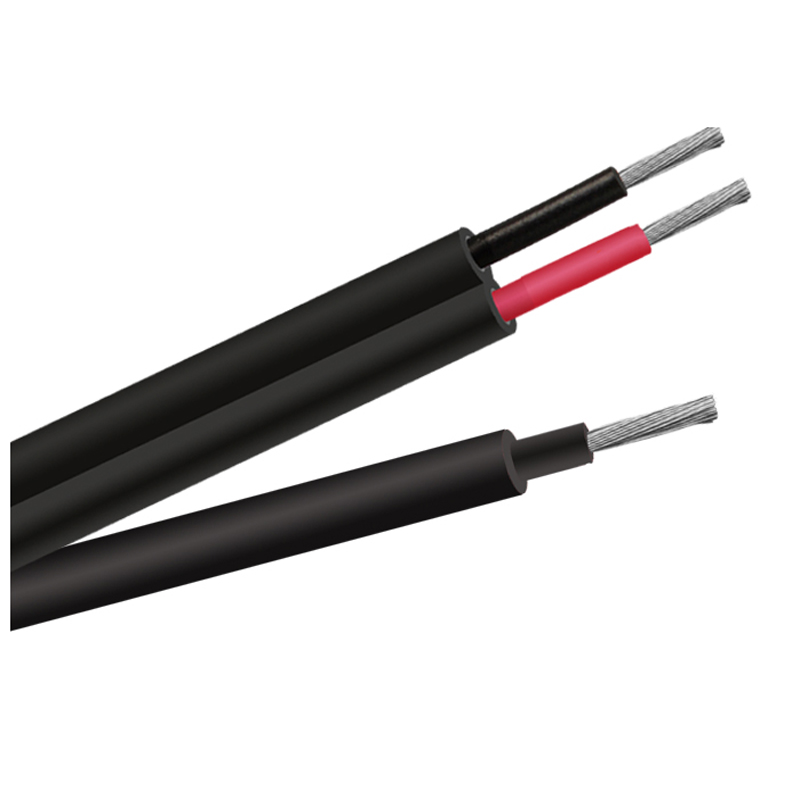
Solar PV cable for the DC side of photovoltaic plants — a separate compliance question from AC distribution cable.
Offshore platforms and shipbuilding
Marine environments compress installation space and raise the cost of replacement. Shenghua Cable’s Marine Cables (MFVP, MYP, MCPT and related types) are listed for 0.6/1 kV and 3.6/6 kV, with applications covering cargo ships, oil tankers, bulk carriers, cruise liners, ferries, jack-up rigs, semi-submersibles, FPSO vessels and naval vessels. Because these projects usually impose their own approval regime on top of the standard, the buyer should collect the classification or project-specific documentation for each cable type rather than rely on a general power cable certificate.
Fire-emergency and high-rise circuits
Life-safety circuits invert the usual priority: circuit integrity during a fire matters more than efficiency. Shenghua Cable’s Mineral Insulated Cable (BTTZ/BTTRZ, BTLY) is listed for 300/500 V, 450/750 V and 0.6/1 kV and is used for fire-resistant wiring, high-temperature industrial equipment and critical power systems, with applications including fire pumps, smoke extraction fans, emergency exit lighting, hospital operating theatres and hazardous chemical storage areas. The evidence to request here is fire-performance test documentation for the specific construction, linked to the model on the order.
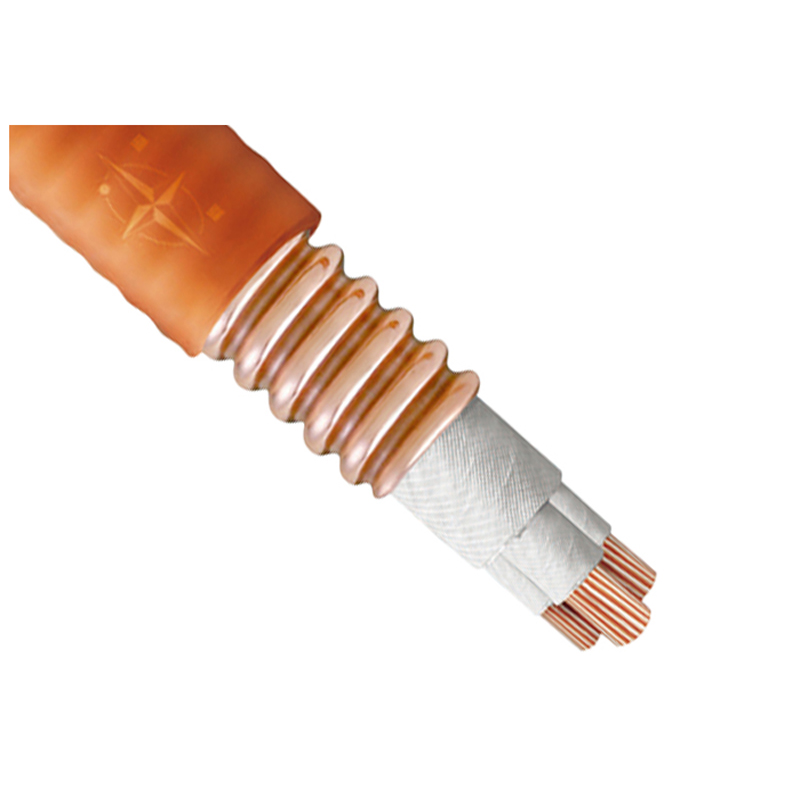
High-temperature, low-smoke construction used where circuit integrity and smoke behaviour are both specified.
Power utilities and grid infrastructure
Utility buyers work with the widest voltage span. Shenghua Cable’s Power Cables range is listed from 0.6/1 kV up to 290/500 kV and is applied in municipal distribution feeders, regional substations, steel and cement plants, airport runways, railway traction stations, data centres, pumping stations and desalination plants. The Medium Voltage XLPE Insulated Power Cable listings at 8.7/15 kV and 33 kV and 35 kV armoured constructions are the ratings most often quoted against IEC 60502-2-type requirements — and the ones where the buyer must check that the report covers the model, not just the factory.
Mining, construction and industrial automation
Mobile and high-abuse environments stress mechanical construction as much as electrical performance. Mining Cables (MFVP, MYP, MCPT) are listed for 0.6/1 kV and 3.6/6 kV, sometimes 6/10 kV, and are applied to continuous miners, shearers, shuttle cars, electric shovels, draglines, conveyor systems and shaft sinking. Rubber Sheathed Cable (YC/YCW, YZ/YZW) at 300/500 V and 450/750 V serves portable equipment on construction sites and port terminals. Control & Instrumentation Cables carry signals in automated production lines, refineries, power plant monitoring and food and beverage plants, where screening and signal integrity become the specification drivers.
Comparison Table: Product Families, Listed Scope and Documents to Request
| Product family (Shenghua Cable) | Listed models / types | Voltage or scope as listed | Documents to request before ordering |
|---|---|---|---|
| Power Cable | YJV, YJV22, YJV32, YJY, YJY23, YJY33, YJLV, YJLV22, YJLV32, Z-/WDZ- variants | 0.6/1 kV; 8.7/15, 12/20, 18/30, 21/35 kV listed | Standard and edition; model-level type-test report; certificate covering the ordered rating |
| Power Cables (full range) | LV, MV, HV, EHV; armoured and unarmoured | 0.6/1 kV up to 290/500 kV | Standard reference per voltage class; separate evidence for each class |
| Marine Cables | MFVP, MYP, MCPT | 0.6/1 kV, 3.6/6 kV | Type-test and project/class approval documentation for the ordered type |
| Solar Cables | PV1-F | 600 V to 1500 V DC | PV cable type test and certificate for the specific model |
| Mineral Insulated Cable | BTTZ/BTTRZ, BTLY | 300/500 V, 450/750 V, 0.6/1 kV | Fire-performance test evidence tied to the construction |
| Control & Instrumentation Cables | KVV/KVVP/KVVRP, DJYPVP/DJYVP/WDZ-DJYJPYP | 300/500 V to 450/750 V | Screen/shield configuration and type-test documentation |
| Rubber Sheathed Cable | YC/YCW, YZ/YZW | 300/500 V, 450/750 V | Flexibility and mechanical test documentation |
| Building Wires | BV/BLV/BVV/RVV/BVVB, BYJ | 300/500 V to 450/750 V | Flame/fire performance evidence and market mark |
| Mining Cables | MFVP, MYP, MCPT | 0.6/1 kV; 3.6/6 kV, sometimes 6/10 kV | Mining-specific approval or test documentation |
| Overhead Conductors | AAC/ACSR/ABC/AAAC | Usually 0.6/1 kV to 35 kV; some types above 66 kV | Conductor test reports and dimensional compliance |
All model designations, voltage ratings and applications in this table are taken from Shenghua Cable’s published product and application data. Certifications and portfolio-level approval claims are company-reported and should be confirmed at model level.
Frequently Asked Questions
1. Is CE marking alone enough to prove an electric cable meets a project’s technical standard?
No. CE marking is a market-access declaration for products covered by applicable EU legislation, while a project standard defines construction, dimensions and test requirements. A project specifying IEC 60502-2:2014 — rated 6 kV to 30 kV with Um from 7.2 kV to 36 kV — needs model-level type-test evidence in addition. Shenghua Cable holds KEMA test reports for 8.7/15 kV XLPE/armoured power cables with an issue date of 2016-01-12; a buyer would verify that the report names the model and rating being ordered before accepting the cable against the specification.
2. Which Shenghua Cable products fall inside the IEC 60502-2 voltage window?
The Power Cable range lists medium-voltage ratings at 8.7/15 kV, 12/20 kV and 18/30 kV, all within the 6 kV to 30 kV rated-voltage band covered by IEC 60502-2, alongside 0.6/1 kV low-voltage and 21/35 kV listings that fall outside that band. Shenghua Cable also lists armoured constructions at 33 kV and 35 kV rating levels in its catalogue. Inclusion in the catalogue indicates the rating exists; it does not by itself prove conformity, so the buyer should request the model-specific report for the exact construction ordered.
3. How should certification scope affect budget comparison between suppliers?
Fix the compliance specification before comparing price. Two quotations for what looks like the same cable are not comparable if one covers a different voltage class, conductor material, armouring type or document set. The practical approach is to issue identical specification lines — standard and edition, rated voltage, conductor, insulation, armour, sheath and the list of documents to be delivered — and to require every supplier to quote against that same list. Certification and testing effort is one of the variables that changes with scope, so it belongs in the specification rather than in the price negotiation afterwards.
4. Can a buyer validate compliance on a sample before placing a production order?
Sample evaluation is the normal way to connect a document to a physical product: the sample should be declared against the same standard, model and voltage rating as the intended order, and it should arrive with the corresponding documentation so that the sample and the certificate reference the same construction. Buyers evaluating Shenghua Cable’s Power Cable, Marine Cable, Solar Cable or Mineral Insulated Cable ranges can raise a sample or quotation request through the contact details at the end of this guide, stating the standard, model and rating required.
5. What documentation timeline should be planned, and how does capacity affect it?
Documentation work has its own lead time and should be scheduled before the purchase order, not after: certificate retrieval, confirmation of model coverage and validity dates, and agreement on the test reports to ship with the goods all take coordination between the buyer’s engineering team and the supplier’s quality team. Capacity supports volume once the specification is fixed — Shenghua Cable operates 7 production bases and 21 factories with a reported annual capacity of about 1.1 million km of cable, and exports roughly 30% of output. Actual delivery schedules vary by model and order, so they should be confirmed per project rather than assumed from capacity figures alone. To start that process, contact the Shenghua Cable team directly.
Conclusion: Compliance Is a File, Not a Badge
The difference between a smooth cable delivery and a rejected shipment usually comes down to three questions asked early enough: which standard and edition governs this cable, which document proves it for this exact model, and which application conditions add requirements beyond the standard. Buyers who answer all three before the RFQ end up with a compliance file that survives customs, engineering review and project handover. Buyers who accept a portfolio-level certification claim at quotation stage often find the gap later, when there is no time left to close it.
The four-layer framework — standard, certification, construction, application — does not require a compliance specialist to operate. It requires discipline about scope: IEC 60502-2:2014 for the 6–30 kV extruded-insulation band, KEMA or equivalent type-test reports naming the tested model, construction details written into the purchase order, and application requirements matched to the correct product family. Applied consistently, it turns a confusing landscape of marks into a short, checkable list.
Next step: match your specification to the right cable construction
Send Shenghua Cable your standard reference, rated voltage, installation environment and the documents your project requires, and request a model-level quotation, sample evaluation or the full product catalogue.
Email: zhaomeilia@shenghuacablegroup.com | Tel / WhatsApp: +86 15901866124
Website: www.shenghuacablegroup.com | Address: No.7577 of Hunan RD., Pudong New District, Shanghai 201314, China
Download the product brochure: Shenghua Cable Brochure (PDF)

Cable orders prepared for dispatch — documentation, labelling and packing are checked against the purchase order before shipment.
Have Questions or Need More Details?
Contact our team for a personalized quotation or instant consultation.
Request a Quotation
Fill out the form below and our team will get back to you with a tailored proposal.
WhatsApp Direct Chat
Prefer to chat in real-time? Message us on WhatsApp for instant assistance & quick answers.
- Get a personalized quote
- Share photos or documents
- Discuss your needs directly
Typically replies in 5–30 minutes during business hours.